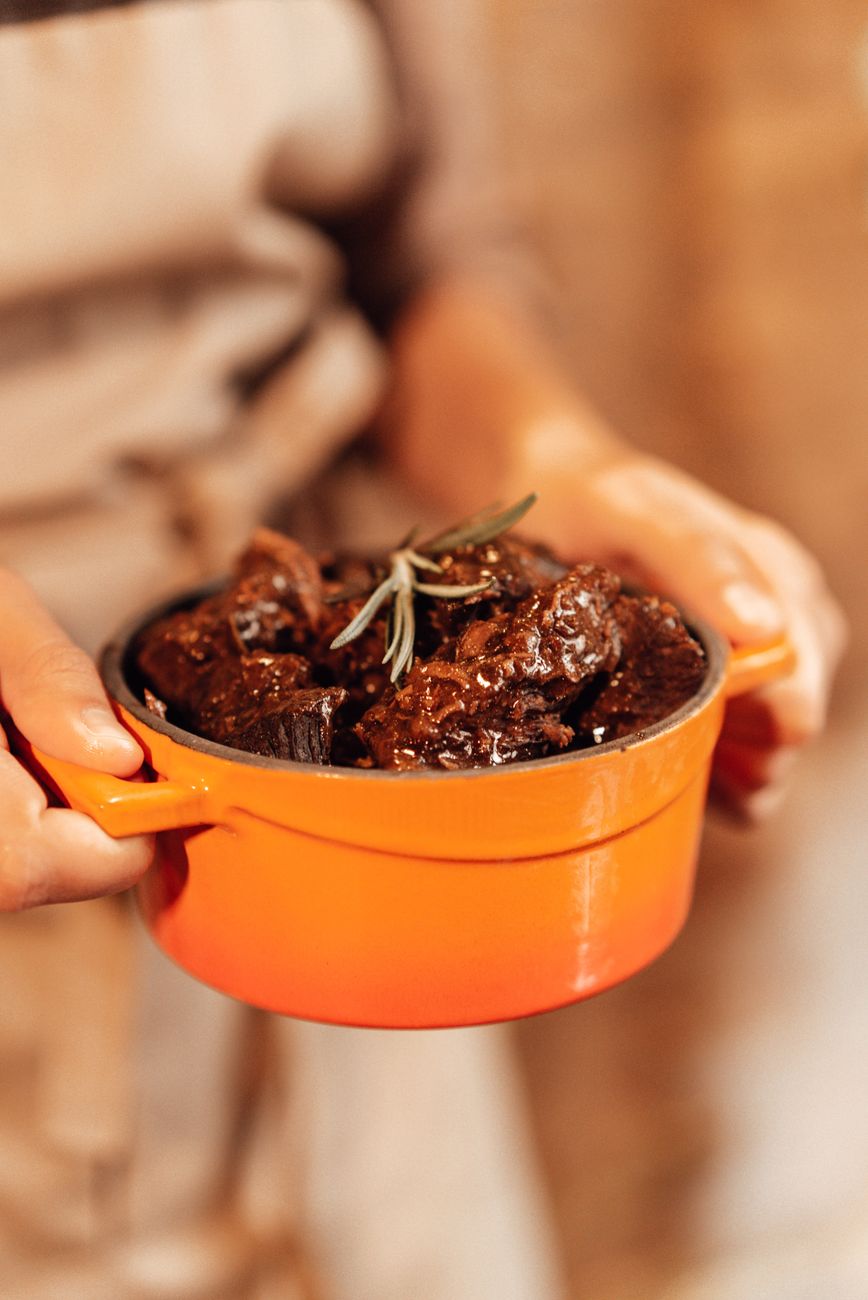
One good pot finishes the 20% of cooking a pan cannot
A “good pot” here means a 5.5- to 6-quart round Dutch oven — enameled cast iron, ceramic-coated aluminum, or bare cast iron — with a heavy lid that seals on contact and an oven rating of at least 450°F. Round shape, not oval. Five-and-a-half quarts, not three and not nine. Get those three right and a single fixture handles every braise, every weeknight soup, every pot of rice, every weekend bread, every batch of chili big enough for a household of four. One good pan does 80 percent of home cooking; one good pot does the remaining 20 — the deep, slow, lidded work no skillet can. Per-piece cost runs $70 to $450 across tiers, per-year cost lands between $3 and $18 across the 25–50 year lifespan of all three pots below. The argument that follows is the math, the materials, and the three pots worth living with for the second half of your career as a cook.
Why the second pan is a pot, not another pan
Most starter cookware sets answer “what’s the second piece?” by giving you a smaller version of the first — an 8-inch fry pan to go with the 10-inch, a 1.5-quart saucepan to go with the 3-quart. Both choices duplicate work your primary pan already does, only in a slightly inconvenient size. The honest answer to “what’s the second piece?” is a piece of cookware that does what the first one cannot — depth, a tight lid, and the kind of heat retention that turns six hours into a one-pot dinner.
The case for one good pan was that a single skillet handles searing, sautéing, finishing in the oven, and short-lid braising. The case for one good pot is the asymmetric piece: deep enough to hold a chicken with stock to cover, sealed enough to braise a shoulder of pork for four hours without losing the liquid, ovenproof enough to bake a sourdough loaf at 475°F with the lid on for steam and off for crust. Those four functions — capacity, seal, oven heat, and slow simmer — are the four things a 10-inch skillet structurally cannot do.
What you do not need as the second piece, despite what most “essential cookware” lists insist: a dedicated stockpot, a saucier, a 1.5-quart saucepan, a steamer pot, a chicken fryer, or an Instant Pot. A Dutch oven (round, 5.5–6 quart) does the work of all six. The Instant Pot replaces it on speed, not on outcome — the same braise comes out softer in cast iron over four hours than under pressure in 45 minutes, because gelatin development is a function of time at temperature, not just pressure. Pick your trade-off; we picked the one that produces better food.
What does “good” actually mean in a pot?
Four properties separate a pot that earns its place on the stove from one that lives in a cabinet. Get these right and you can shop for a $70 Lodge or a $450 Le Creuset on the same terms.
Capacity matched to your household, not the showroom. A 5.5-quart pot cooks 4 servings of stew with room above the liquid line for the lid to seal cleanly; a 6-quart fits a 4–5 lb chicken with a quart of stock; a 7.25-quart is the right size for households of 5+ or for batch cooking that splits into freezer portions. Anything under 4 quarts is a saucepan in disguise — wrong for braising, wrong for bread. Anything over 8 quarts is restaurant equipment that will not fit on a standard burner without crowding the next one.
Wall thickness — 4 to 6 mm. This is the single number nobody mentions and the one that decides whether the pot retains heat through a four-hour braise or crashes the moment you add a cold cup of stock. Enameled cast iron is 4–6 mm at the wall, 6–8 mm at the base. Cheap “cast iron” stockpots from off-brand makers run 2–3 mm and behave like aluminum. Pick up the pot in the store; the heft tells the truth that the marketing copy will not.
Lid that seals on its own weight. A Dutch oven lid must drop into place with enough mass to form a self-sealing edge — no gasket, no screw, no clamp. The lid weighs roughly one-fifth of the pot itself; a 6-quart pot has a 1.5–2 lb lid. When the lid is on and the food is simmering, you should hear the lid settle every 30 seconds as steam pressure builds and releases under its own weight. That settling is the pot doing the work of a pressure cooker, slowly.
Oven-safe to 500°F, lid included. A pot that cannot bake bread is missing its highest-value function. Sourdough at 475°F with the lid on for 20 minutes is the test case; any pot that survives that survives every braise, every casserole, every Sunday roast. Look for “oven-safe with lid to 500°F”; the lid rating is the part most product pages bury.
The four pot materials, in one table:
| Material | Wall thickness | Heat retention | Lid seal | Oven-safe | Weight (5.5-qt) | Best for |
|---|---|---|---|---|---|---|
| Enameled cast iron | 4–6 mm | Excellent | Heavy, gravity-sealed | Yes, 500°F (lid included) | 12–14 lbs | Braising, bread, daily driver |
| Bare cast iron Dutch oven | 4–6 mm | Excellent | Heavy, gravity-sealed | Yes, 700°F (lid included) | 12–14 lbs | Outdoor / camp, acidic foods limited |
| Ceramic-coated aluminum pot | 3–4 mm | Moderate | Light, glass lid w/ gasket | Yes, 425°F (often lid-less) | 5–6 lbs | Soups, rice, lighter braises |
| Tri-ply stainless stockpot | 3 mm bottom, 2 mm wall | Moderate | Medium, steel lid | Yes, 600°F | 6–8 lbs | Stocks, pasta water, boiling tasks |
The table also explains why most “best Dutch oven” lists keep landing on enameled cast iron. The material wins on every metric that defines what a pot is for. The exception is weight — a 14-pound pot is genuinely a lot, and for cooks who will resent it, a ceramic-coated aluminum 5-quart pot at half the weight is the honest second pick. The two pots cover different bands of the same job.
Three pots we’d actually live with
Three picks across three budgets. Each is a true Dutch oven (5.5–6 quart, round, lid that seals on weight, oven-safe to 450°F+). Affiliate state flagged on each link.
Entry — Lodge 6-quart enameled cast iron, around $70–100
The Lodge enameled 6-quart is the no-decision purchase for the second-piece slot. It is the same enameled cast iron construction as Le Creuset — bare iron core, three layers of vitreous enamel — at one-fifth the price. The enamel is slightly less smooth (you will notice the difference if you compare them side by side), the colors are limited (red, blue, white, navy), and the brand cachet is absent. None of that matters in a pot whose job is to hold heat through a braise. Wall thickness is 5 mm; lid is 1.7 lbs; oven-safe to 500°F with lid; dishwasher safe (do not actually use the dishwasher, but you can).
The shortcomings are honest. The handles are smaller than premium brands, which matters when removing a 14-lb pot from a 475°F oven (use both hands and dry mitts). The enamel chips if you slam the lid down empty (do not slam the lid down empty). The black interior makes it slightly harder to judge fond color than the cream-interior premium pots; once you have used it for a month, you read fond by smell rather than sight anyway.
Pair it with $25 silicone handle covers and a $15 chainmail or bristle pot scrubber. Total kit under $130 for a pot that outlives the kitchen it sits in.
Mid — Our Place Perfect Pot, $165
This is the second half of the Always Pan argument. The Perfect Pot is a 5.5-quart ceramic-coated cast aluminum Dutch oven with a tempered glass lid, a steamer insert, a built-in roasting rack, and an integrated spatula slot. Our Place markets it as replacing eight pieces of pot cookware — stockpot, Dutch oven, baker, brazier, saucepot, casserole, steamer, and roaster — and as before, the marketing is correct because the geometry is correct. A 5.5-quart Dutch-oven-shaped vessel with a sealing lid and an included steamer does all eight jobs.
What you are buying: a ceramic non-stick interior free of PFOA, PFOS, lead, and cadmium; a cast aluminum core that brings the weight down from 14 lbs (enameled cast iron) to about 6 lbs; an oven-safe rating of 425°F (lid sold separately for full-temp baking); compatibility with all cooktops except induction. The trade-offs are real — 425°F is not high enough for the high-heat sourdough method (the workaround is to start at 425°F lid-on for 25 min, lid-off for 20 min, accepting a slightly less aggressive crust), the ceramic coating has a 3–5 year primary lifespan like the Always Pan, and the glass lid is decorative rather than structurally identical to a cast iron lid.
We recommend this as the primary pot in any kitchen where total cookware weight is a factor (small apartments, walk-up rentals, cooks with wrist issues, anyone moving in the next 2 years). At the 4-year average ceramic lifespan, per-year cost is about $41 — comparable to a Le Creuset over 25 years.
Heirloom — Le Creuset 5.5-quart Signature, $380–450
The case for spending here is the same case as for an heirloom lamp: a $400 Le Creuset will be the same pot in twenty-five years, in the same finish, with the same lid, the same handles, the same brand-name enamel that the company will repair under their lifetime warranty. The Signature line replaced the Classic in 2014 with two improvements that justify the premium over Lodge: larger, easier-to-grip handles (a 6-lb difference in hand strain when removing from the oven), and a stainless steel lid knob rated to 500°F (Classic Le Creusets shipped with phenolic knobs that maxed out at 375°F and had to be replaced for serious bread baking).
What you are paying for over the Lodge: smoother enamel that releases better at the start of seasoning, slightly larger handles, the stainless knob, color range (twelve finishes that the brand keeps in production for decades), and resale value — a 20-year-old Le Creuset still sells for $200+ on the secondary market, which a 20-year-old Lodge does not. You are not paying for materially better cooking performance, which is identical to the Lodge with the same bulb-and-lid combination — both pots produce the same braise.
The 5.5-quart Signature is the pot we recommend as the heirloom version of the second piece, sized for households of 2–4. The 7.25-quart is the right move for households of 5+ or for serious batch cooking. Either is the pot you cook in for your entire adult life.
Five things one good pot does in a week
The pot earns the title “one good pot” only if it does five distinct jobs in a typical week. The list below is the working repertoire — five techniques that exercise the full range of a 5.5–6 quart Dutch oven with a sealing lid. Run all five in the first month and the pot stops feeling like a luxury and starts feeling like the second half of a two-piece kitchen.
- Braise a tough cut into a tender dinner. A 3 lb chuck roast browned in the pot, deglazed with red wine, covered with stock and aromatics, lid on at 300°F for 3 hours. The fond on the bottom of the pot becomes the sauce. This is the headline use case and the one the pot was structurally designed for.
- Build a weeknight soup in one vessel. Onions sweated in butter at the bottom, stock added, vegetables in, protein in, simmer 25 minutes with the lid cracked. No second pot for stock, no transfer between vessels. Cleanup is one pot and one ladle.
- Cook rice or grains lidded. Two cups of rice, four cups of water, a pinch of salt, lid on, 12 minutes at low. The same pot that braises does pilaf, risotto (without the constant stirring fetish — see Marcella Hazan), or a one-pot grain salad with the lid off at the end.
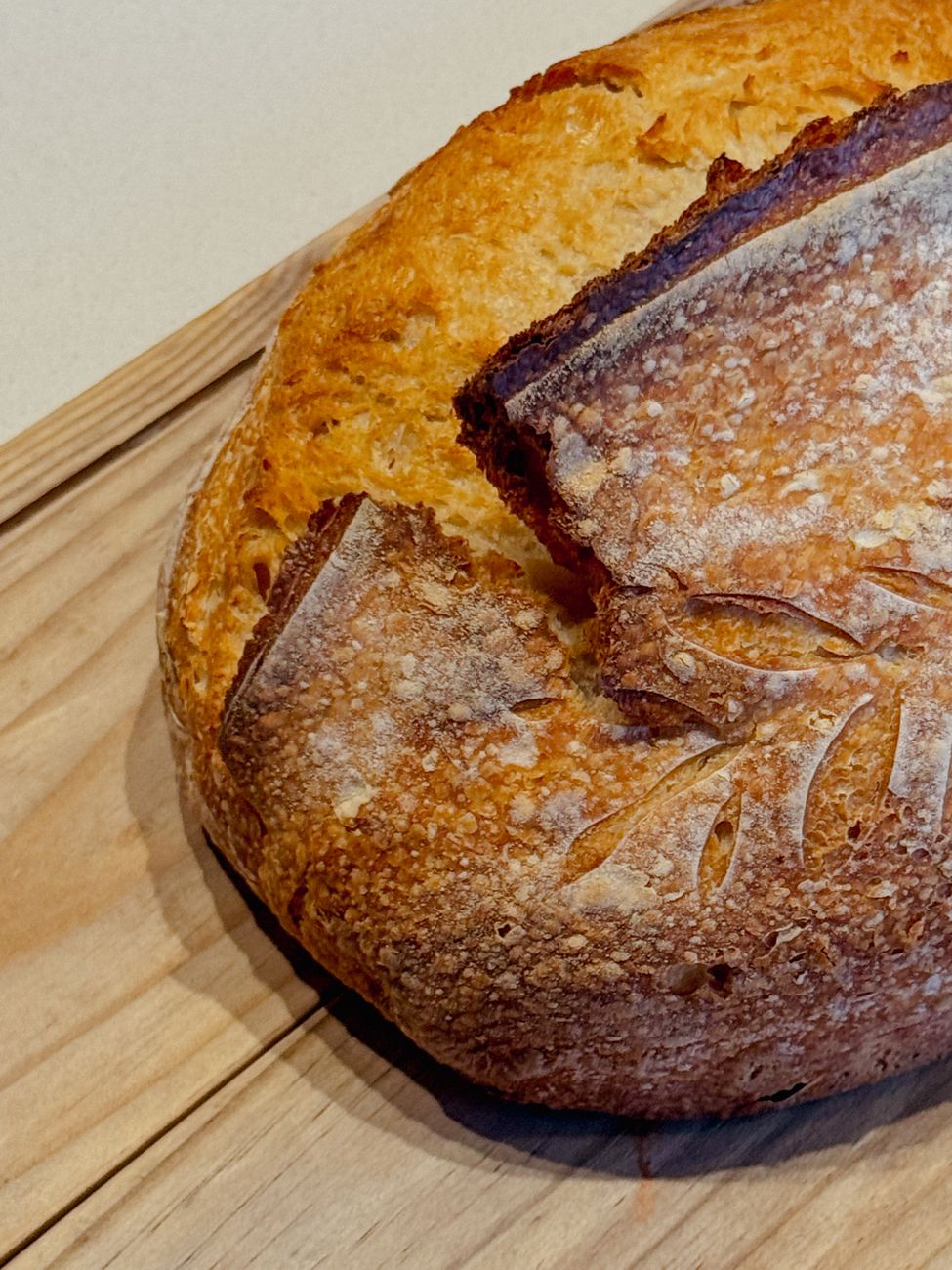
- Bake a no-knead sourdough loaf. Preheat the pot empty at 475°F for 30 minutes. Drop in the dough, lid on for 20 minutes, lid off for 20 more. The pot becomes a 1880s-style baker’s oven; the loaf comes out with a crust that requires a $4,000 deck oven to replicate otherwise. This is the use case that justifies the pot to anyone unconvinced by the other four.
- Serve at the table. A pot heavy enough to retain heat through dinner is a pot heavy enough to be the centerpiece of the table. Serve from the pot, ladle into bowls, set it back on a trivet. The dishwasher loses one serving dish from the cycle every meal.
A note on care across all three pots: hand-wash with hot water and a soft brush; the enamel and the ceramic both survive the dishwasher technically but lose finish over time; dry on a low burner or in the cooling oven; for the Lodge and Le Creuset, store with the lid slightly off-set so any trapped moisture evaporates. Three years of this routine and the pot looks the same as the day it shipped.
Living with two pieces of cookware
A kitchen that runs on one pan and one pot is a kitchen that has answered the question most kitchens never quite get to: what is actually used every week, and what is stored as decoration. The drawer of small pans, the saucepan that never simmers anything, the steamer insert that has not been touched since the third week — they leave, slowly, over the first year. The cabinet recovers. The dishwasher recovers harder. The grocery list adjusts to favor techniques (braise, simmer, sear) over recipes that require a fourth piece of equipment.
The other thing that changes is the relationship to dinner itself. A pot doing six hours of slow work in the background is a pot saying dinner is already happening in a way no skillet ever does. The kitchen smells right by 4 p.m. on a Sunday; the bread bakes between phone calls; the soup at 7 p.m. is the third use of the same pot that morning. The lid-on rhythm matches the evening lighting routine — both are protocols where the work is done by a single fixture, set up once, that requires nothing but time.
The two-piece kitchen, fully assembled, looks like this:
- One good pan — 10–12 inch skillet with a lid, the daily driver for sear, sauté, and short-finish work. See the case here.
- One good pot — 5.5–6 quart Dutch oven, the slow-work fixture for braise, soup, bread, and rice. The piece this article is about.
- One large bowl, one cutting board, one chef’s knife, one wooden spoon, one set of tongs. That is the supporting cast. Anything beyond it is optional.
Most kitchens we have helped strip down to this configuration end up with about 30 percent more counter space and a measurable drop in weekly grocery spending — fewer pieces of equipment means fewer recipes that require obscure ingredients, which means a tighter shopping list. The savings are not the point, but they are real.
Frequently asked questions
What is the difference between a Dutch oven and a stockpot? A Dutch oven is shorter and wider with a heavy, gravity-sealing lid and walls 4–6 mm thick; a stockpot is tall and narrow with a lighter lid and walls 2–3 mm thick. Both can hold 6 quarts, but they hold them differently — the Dutch oven retains heat through a four-hour braise and bakes bread at 475°F; the stockpot boils water faster and reduces stock with less evaporation per surface area. For home cooking, a Dutch oven does 90 percent of what a stockpot can plus everything a stockpot cannot. Stockpots are restaurant equipment that migrated into home kitchens by accident.
Are one-pot meals healthy? On average, yes — they require fewer added fats than multi-pan cooking (no second pan to grease, no transfer to a serving dish), and the slow-cook style favors vegetables, legumes, and modest protein portions over breaded or fried preparations. The honest qualification: a one-pot meal is only as healthy as the ingredients in it. A Dutch oven full of cream sauce is not health food. But the technique itself biases the cook toward whole ingredients and away from processed shortcuts, which is the part most one-pot guides skip.
What does “one pot” mean? “One-pot” refers to a cooking style where the entire meal — protein, vegetable, starch, and sauce — is built in a single vessel from start to finish, with no transfer to a second pan and no separate cooking of sides. The vessel is almost always a deep pot or Dutch oven, with a lid that allows the dish to braise, simmer, or steam without supervision. The technique is older than recipes; “one-pot” only became a marketing label after multi-piece cookware sets normalized using four pans per meal in the 1950s.
Can a Dutch oven replace a pressure cooker or Instant Pot? For most home use, yes — at the cost of time, in trade for slightly better texture. A four-hour low-temperature braise in a Dutch oven produces more dissolved collagen and softer connective tissue than a 45-minute pressure cycle in an Instant Pot, because gelatin formation is a slow function of temperature. The Instant Pot wins on convenience and speed; the Dutch oven wins on flavor and on having one fewer countertop appliance. A two-piece kitchen does not include both.
What size pot is the most useful? 5.5 to 6 quart, for households of 2–4. This size fits a 4–5 lb chicken with stock, doubles as a bread baker, fits on a standard 9-inch burner, and produces enough food for four dinners with leftovers. Smaller (3.5 qt) is a saucepan; larger (7.25 qt+) is correct only for households of 5+ or for batch cooks who freeze in 4-portion containers. If you can only own one pot, buy the 5.5-quart and accept the rare night when you need to split the soup into two batches.
How long should a good pot last? By material: enameled cast iron, indefinitely (Le Creuset’s lifetime warranty replaces chips at no cost; 30–50 year service is common); bare cast iron, indefinitely with seasoning maintenance; ceramic-coated aluminum, 3–5 years of primary use plus 5–10 years as a lower-stakes pot; tri-ply stainless, 25–50 years. A $400 Le Creuset over 30 years costs $13/year. A $70 Lodge over 30 years costs $2.30/year. Either beats replacing a $50 ceramic pot every 4 years on a per-decade basis.
Read next
- The case for one good pan — the first half of the two-piece kitchen.
- The case for one good lamp — the same argument, applied to the living room.
- The evening lighting routine — the kitchen at dinner is part of this protocol.
- Affiliate and editorial disclosure — what we earn from what.