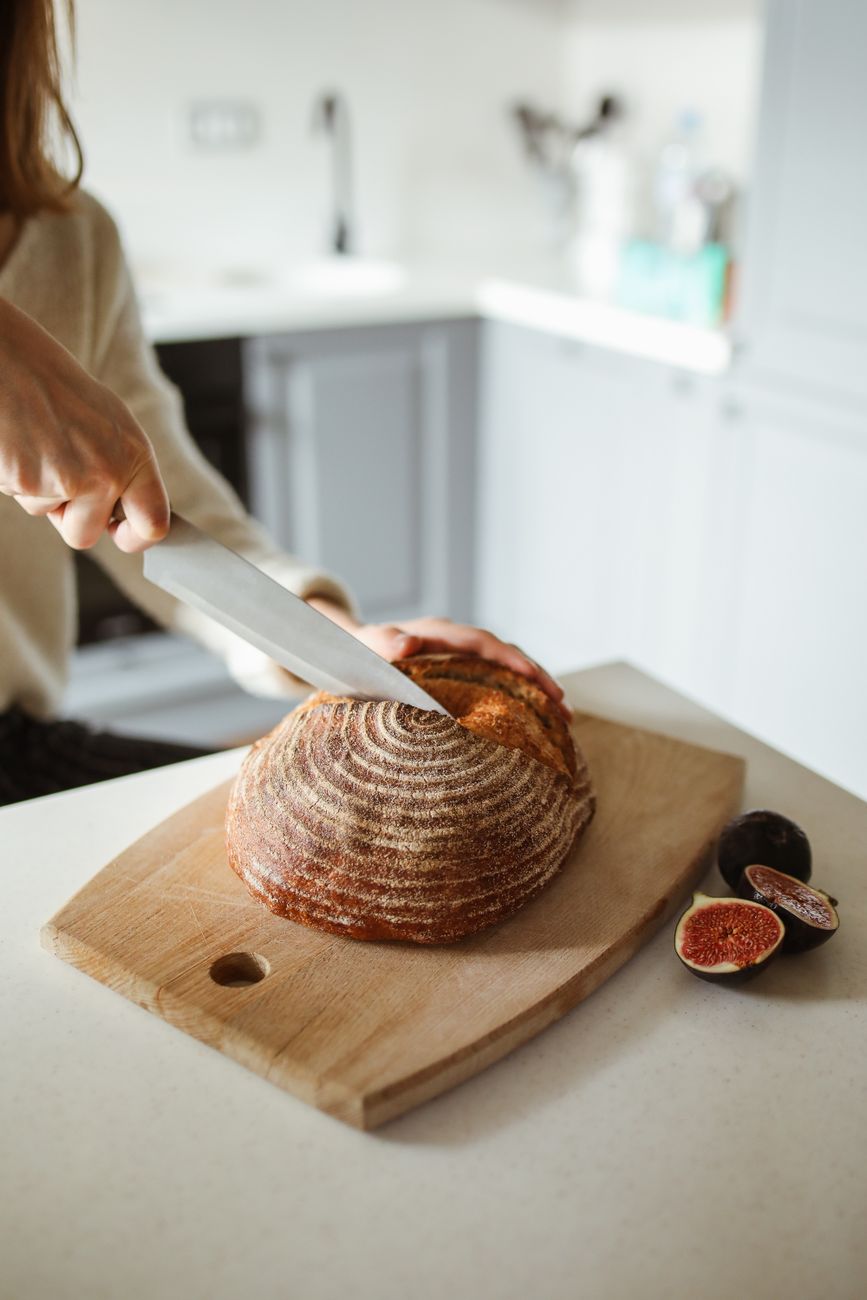
One good hardwood board handles 80% of home cutting work
A “good cutting board” here means an 18-by-12-inch edge-grain hardwood board — maple, walnut, or cherry — at least 1.25 inches thick, unlaminated, with a food-safe finish. Get those four properties right and the same board handles vegetables, fruit, bread, cheese, and cooked meat with a proper wipe-down between each. The average American kitchen owns three to five cutting boards — usually a plastic prep board, a bamboo board picked up somewhere, a small paring board that lives in a drawer, and a “meat only” board bought after a food-safety podcast — and uses one of them for 80 percent of the actual cutting work. That one board is the 18x12 hardwood. The rotation-and-color-code system that most food-safety guides recommend is a restaurant protocol that does not scale down to a home kitchen where the same cook does all the cutting on the same shift. Good boards run $90 to $380 across tiers, all three below outlast the cabinets they sit on, and the per-year cost of the middle tier is under $12.
Why most kitchens own too many boards
The multi-board rotation is a restaurant kitchen habit that migrated into home cookbooks in the 2010s. In a professional kitchen with a raw-meat station, a produce station, and a bread station running simultaneously with three cooks working in parallel, the color-coded HACCP board system makes sense — the boards live at different stations and never cross-contaminate because they never move. In a home kitchen, where you (one cook) prep vegetables, then meat, then bread over the same 40 minutes on the same counter, you cannot prevent cross-contamination by owning multiple boards. You can only prevent it by cleaning the board you have between tasks. The extra boards are theatrical safety at best and clutter at worst.
The case for one good pan was that a single skillet handles 80 percent of cooking; the case for one good cutting board is the same argument applied to the workstation the chef’s knife lives on. A good knife and a good board are a pair — a knife’s edge lasts three times longer on end-grain hardwood than on bamboo or dense plastic, and a hardwood board that survives 20 years of daily use is the surface that lets a $200 chef’s knife stay sharp between honings. Buy them together; they age together.
Two secondary facts worth naming. First: real hardwood boards are self-healing to a degree — the knife marks close up after a mineral-oil treatment. Bamboo, plastic, and composite boards accumulate visible cut lines that do not close. Second: the FDA and USDA both concluded in the 1990s that hardwood surfaces are as safe as plastic for home use, and possibly safer — the phytochemicals in wood inhibit bacterial survival. The “wood is unsanitary” claim was never accurate.
What does “good” actually mean in a cutting board?
There are four properties worth knowing. Get these right and you can shop for a $90 Boos or a $380 Larch Wood on the same terms.
Material — hardwood, specifically closed-grain species. The wood matters more than any other spec. Maple, walnut, and cherry are the three species that professional US board makers use, and each has a slightly different grain density. Maple (Janka hardness 1450) is the workhorse; walnut (1010) is softer but easier on knife edges; cherry (995) is the softest of the three and shows the most patina. Avoid: oak (open-grain, harbors bacteria in the pores), pine or any softwood (too soft, gouges), bamboo (technically a grass, glued together with formaldehyde-based binders in cheap boards), teak (open-grain oil issues), and end-grain “butcher blocks” glued from mixed species (delaminate at the seams within 5 years).
Grain direction — edge-grain or end-grain, not face-grain. End-grain (fibers pointing up at the cutting surface) is the most knife-friendly and the most expensive — cutting between the fibers rather than across them is what preserves the edge. Edge-grain (fibers running lengthwise, boards oriented on their sides and glued) is 60 percent as good for knife longevity at 40 percent of the price and is our recommendation for most home kitchens. Face-grain (a slab cut flat from the log with fibers parallel to the surface) is the cheapest and the worst — it gouges deeper on the knife strokes.
Size — at least 18x12 inches for a primary board. Home boards run from about 8x6 (produce boards) to 24x18 (professional). The sweet spot for a primary board is 18x12 to 20x15 inches. Anything smaller crowds the workspace and forces multi-batch cutting; anything larger is hard to move to the sink and store. A 1.5-inch thickness is the minimum for structural integrity; 1.75-2 inches is preferred and won’t warp over decades.
Finish — food-safe mineral oil, no plastic sealants or waxes with unclear composition. A good board ships with a food-safe finish and needs regular oiling — typically every 4-6 weeks in the first year, every 3 months thereafter. Beeswax topcoats extend the interval between oilings and add water resistance. Avoid: boards sealed with polyurethane, epoxy, or “food-safe lacquer” — these coatings degrade under knife strokes and can leach into food. If a board’s finish is proprietary and unnamed, it is not worth the price.
The four material categories, in one table:
| Material | Janka hardness | Knife wear | Sanitation (home) | Lifespan | Best for |
|---|---|---|---|---|---|
| Maple (hard rock) | 1450 | Excellent | Excellent (self-healing) | 25–50 years | Primary board, high-frequency use |
| Walnut | 1010 | Very good | Excellent (self-healing) | 25–50 years | Aesthetic-first heirloom |
| Bamboo | 1380 (technically grass) | Poor (silica in fibers dulls knives fast) | Moderate (glue joints trap moisture) | 3–7 years | Cheap, avoid for a primary board |
| Dense plastic (HDPE) | N/A | Good | Excellent (dishwasher safe) | 8–15 years | Raw meat prep in mixed-cook kitchens |
| Composite rubber (Hasegawa) | N/A | Excellent | Excellent (dishwasher safe) | 15–30 years | Professional-grade dual-surface option |
Most editorial reviews (Serious Eats, Bon Appétit, Wirecutter) converge on the same answer: edge-grain hard maple is the best primary board for a home kitchen. It hits the durability, sanitation, knife-preservation, and price sweet spot; end-grain maple is the upgrade for cooks who want a 40-year fixture; hardwood-composite (Hasegawa) is the choice for cooks who want commercial-kitchen durability with a modern surface.
Three cutting boards we’d actually live with
Three picks across three budgets. Each is real hardwood (no bamboo, no glued mixed-species blocks), each accepts the mineral-oil-plus-beeswax care routine, and each will outlast the drawer of extra boards it replaces. Affiliate state flagged honestly.
Entry — John Boos R-Board 18x12, around $90–140
John Boos has been making cutting boards in Effingham, Illinois since 1887, and their R-Board line is the entry point to real American hardwood. The 18x12x1.5-inch model uses hard maple in edge-grain construction, dovetailed hardwood corners rather than plastic feet, and a factory-applied food-safe mineral oil finish. It is reversible (both faces are usable), oven-safe up to 300°F for warming, and will accept regular oil-and-wax maintenance for its entire life.
The shortcomings are honest. Boos ships boards with slight variation in maple color across the grain — some boards arrive with contrasting light and dark stripes, which is real wood being real wood, not a defect. The R-Board line is edge-grain rather than end-grain, which means knife edges dull about 15 percent faster than on the higher tier below. And the corners can chip if dropped on tile at just the wrong angle.
Pair it with a $12 bottle of food-grade mineral oil and a $10 tin of Boos Board Cream (mineral oil + beeswax). Total kit under $160 for a board that outlives most kitchen renovations.
Mid — John Boos Prestige 20x15, $150–220
This is the bracket where most single-household kitchens should land, and the board that pairs cleanly with the Made In chef’s knife recommended in K4. The Prestige line is a step up from the R-Board on every axis that matters: 1.75-inch thickness (vs 1.5), tighter grain selection (Boos picks the maple more carefully for this tier), a hand-finished juice groove around the perimeter to catch liquid from bread or meat, and rubber feet on the underside to prevent slipping and improve airflow beneath the board.
What you are buying at this tier: about 5 pounds of dense hard maple that will not warp, cup, or crack under a decade of daily use; a factory finish smooth enough to slide fingers across without catching; and the Boos lifetime warranty against manufacturing defects (they honor it — send the board back, they replace or repair). At a 20x15-inch footprint, this board handles a full sheet pan’s worth of vegetables in one prep session, which is the size argument for going larger than 18x12.
We recommend this as the primary board in any kitchen where cooking happens 3+ times per week. It is also the board we recommend pairing with the K4 knife roll-up — a $150 knife on a $180 board is a workstation that will not need upgrading for 25 years.
Heirloom — Larch Wood Canadian 20x14 end-grain, around $260–380
Larch Wood, based in Nova Scotia, hand-crafts every board from single-species eastern larch — an unusually dense softwood that hardens to Janka 590 when air-dried for 3-5 years and then finished with a boiled linseed oil sealer. The species is genuinely rare (most “larch” you see in furniture is actually European larch, which is softer); Larch Wood is one of two makers globally still working with dense old-growth eastern larch in cutting boards.
You are paying for: end-grain construction that produces the softest cutting surface of any hardwood tier, a warm honey-amber color that darkens with age, hand-finished edges that never chip like machine-cut Boos corners occasionally do, and craftsmanship that shows in every joint — this is a lifetime-warranty artifact, not a mass-produced Boos. The trade-off is weight: 8–10 pounds is heavy enough to be a permanent countertop fixture rather than something you move to the sink.
The 20x14-inch model is the size we recommend for households of 2–4. For a larger household or one that does serious baking (bread rounds, pastry), Larch Wood makes a 24x18-inch version at $450–520 that becomes the counter itself. Either is the board you cook on for the next 40 years.
Care that keeps a board for 30 years
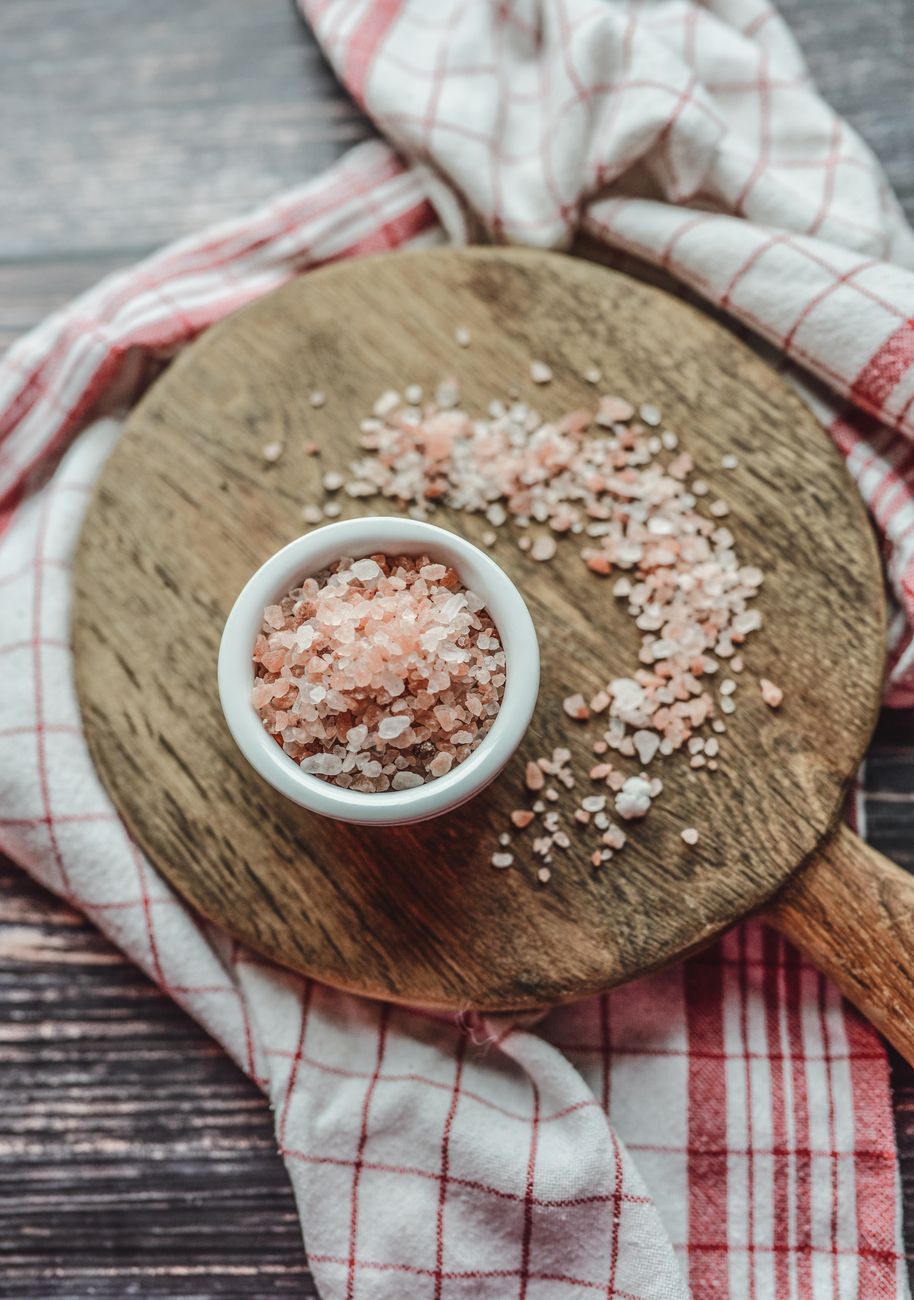
A good cutting board does not need much — but it does need the right little things done consistently. The list below is the working care routine. Follow it and the board looks the same in year 20 as it did on delivery day, minus the deepening patina.
- Wipe with hot water and mild soap after every use. Skip the dishwasher (destroys wood boards) and skip the “wood boards should never touch soap” myth (dish soap is fine on a sealed hardwood surface; the “no soap” rule is for oiled cast iron, not wood boards).
- Dry standing up on the edge, not flat. A board dried flat on a countertop traps moisture underneath, which cups the board over months. Standing on the edge lets air move around the entire surface and prevents warping.
- Oil every 4-6 weeks in year 1, every 3 months thereafter. Rub food-grade mineral oil (grocery store, ~$8/bottle) generously into all sides, let sit for 15 minutes, wipe excess. The board should look slightly darker for a day, then return to normal.
- Beeswax every 6 months (optional but recommended). A tin of Boos Board Cream ($10) or homemade mineral-oil-and-beeswax mix creates a water-resistant barrier that extends oil-treatment intervals to every 6-8 weeks.
- Deodorize with salt and lemon quarterly. Sprinkle coarse salt over the board, scrub with a lemon half. The abrasion lifts embedded odors (onion, garlic, fish) that soap alone cannot reach, and the salt polishes minor knife marks.
Two rules of don’t. First: never soak. Wooden boards submerged in water for 20+ minutes will absorb enough water to warp permanently. Rinse quickly, dry immediately. Second: never dishwasher. The combination of heat and prolonged moisture destroys hardwood cell structure in a single cycle; a board that survives one dishwasher cycle will not survive five.
Living with one board
A kitchen that runs on one good cutting board sits closer to the three-piece kitchen argument than any single-fixture decision. The board lives on the counter, next to the stove, at the workstation where cooking actually happens. Because it is 20 pounds of hardwood too heavy to hide, it becomes visible — the way the cast iron becomes visible after year 5. Both objects earn their permanence.
Two things change once the board is intentional rather than accumulated:
- The drawer of small paring boards clears. The small boards were doing tasks the big board also handles — halving an apple, mincing a shallot. Once the big board is the default, the small ones go to the donation pile within six months.
- Cross-contamination discipline improves. Because there is only one board, the cook actually washes it between raw chicken and salad greens rather than reaching for the “raw chicken” board (which was often not the raw-chicken board because the color coding got confused). One board, one wash routine, no ambiguity.
- The chef’s knife stays sharp longer. Every knife stroke on hardwood is a stroke that doesn’t happen on plastic, bamboo, or (worst of all) marble or glass. Sharpening intervals stretch from every 6 weeks to every 10-12 weeks over the first year of using a hardwood board with a decent knife.
If you have read the case for one good knife, the argument for one good board is its counterpart — the surface the knife lives on. A $150 knife on a $180 board is a two-piece workstation that outlasts every appliance in the kitchen. That is the argument in one sentence.
Frequently asked questions
What is the healthiest cutting board to use? Edge-grain or end-grain hard maple (or walnut/cherry) with a food-safe mineral oil finish is the healthiest mainstream option. Real hardwoods have phytochemicals that actively inhibit bacterial survival — a 1994 UC Davis study found bacteria on hardwood surfaces died at 3x the rate they did on plastic. Avoid bamboo boards with unnamed adhesives (many use formaldehyde-based binders), boards with polyurethane or lacquer sealants, and any board with visible cracks or deep knife gouges. The FDA and USDA both consider hardwood surfaces as safe as plastic for home use.
What is actually the best cutting board material? For home use, edge-grain or end-grain hardwood — specifically hard maple, walnut, or cherry. Professional kitchens sometimes use dense HDPE plastic or composite rubber (Hasegawa) for dishwashable durability, but the trade-off is faster knife wear. For a single-board home kitchen where the same cook does all cutting, hardwood beats every other material on the combined axes of knife preservation, sanitation, durability, and repair-ability (mineral oil closes minor knife marks; plastic cuts are permanent).
What is the best quality cutting board? By editorial consensus in 2026 (Serious Eats, Wirecutter, Bon Appétit): John Boos R-Board or Prestige for the mainstream tier ($90–220), Boardsmith Maple or Brooklyn Butcher Blocks for the mid-heirloom tier ($200–350), and Larch Wood Canadian end-grain for the heirloom tier ($260–450). Hasegawa PRO-PE Lite is the winner in the composite-rubber category ($150–300). All five are made in North America or Japan and carry lifetime warranties against manufacturing defects.
What do chefs recommend for cutting boards? Professional chef consensus favors: (1) large end-grain hardwood boards for daily prep at the pass; (2) dense HDPE plastic or composite rubber for raw-meat stations (dishwasher safety matters in commercial kitchens); (3) never bamboo (too hard on knives), never glass or marble (destroys edges), never small home-goods-store boards under 15x10 (too crowded). Home cooks can borrow the first rule and skip the color-coded rotation — one large hardwood board with proper washing between tasks does the work of three color-coded plastic boards.
Wood vs plastic — which is safer for home use? Both are safe when properly maintained; wood is often safer because of the phytochemical antibacterial effect and because minor knife marks self-heal after oiling. Plastic boards develop deep cut grooves that harbor bacteria and cannot be repaired — after 5–10 years, a plastic board is dishwasher-safe but structurally compromised, while a hardwood board of the same age is still repairable with sanding and re-oiling. For home use, hardwood is the better long-term investment; plastic is fine for cooks who prioritize dishwasher convenience over lifespan.
How do I care for a wooden cutting board? Wash with hot water and mild soap after every use (skip the dishwasher), dry standing on the edge (not flat), oil with food-grade mineral oil every 4-6 weeks in year 1 and every 3 months thereafter. Add a beeswax topcoat every 6 months to extend oil intervals. Deodorize with salt and lemon quarterly. Never soak in water, never put in the dishwasher, never oil with vegetable/olive oil (they go rancid). A well-cared-for hardwood board looks better at year 20 than year 1 — the patina is a feature, not wear.
Read next
- The case for one good knife — the fixture the board was made to work with.
- The case for one good pan — the reduction argument this piece extends.
- Cast iron care: the 30-year plan — same maintenance discipline, applied to iron.
- Affiliate and editorial disclosure — what we earn from what.