
What “non-toxic cookware” actually means, in three sentences
Non-toxic cookware, defined honestly, means cookware that (a) contains no PFAS chemicals in the coating or the substrate, (b) contains no heavy metals — lead, cadmium, arsenic — either intentionally added or migrating from lower-grade steel, and (c) does not shed particulate at high heat that a food-contact-materials specialist would flag on a mass-spectrometer test. That is the harder standard. The soft, marketing-legal standard — “PFOA-free” — has been the industry minimum since 2015 when PFOA was voluntarily phased out; every pan sold in the US after 2015 clears that bar, including many that would fail the harder one. There are five materials that meet the harder standard cleanly: bare cast iron, seasoned carbon steel, tri-ply stainless steel, enameled cast iron, and ceramic-coated aluminum with a third-party-certified coating like Thermolon. Everything else — PTFE (Teflon), GenX, hard-anodized aluminum with a non-ceramic non-stick — sits in the marketing gap where “PFOA-free” is technically true and “non-toxic” is technically not.
Why “PFOA-free” and “non-toxic” are not the same claim
PFOA (perfluorooctanoic acid) is a specific chemical in a family of about 7,000 known PFAS compounds — per- and polyfluoroalkyl substances, the “forever chemicals” you hear about in drinking water. PFOA was the manufacturing agent used to make PTFE non-stick surfaces from the 1940s through 2015; the 3M and DuPont settlements over PFOA contamination are the reason the entire industry replaced it with alternatives, mostly GenX and other short-chain PFAS. Those alternatives are, structurally, the same problem in a smaller molecule. The EPA’s 2024 drinking-water rule regulates six PFAS by name; the other 6,994 remain unregulated by name in the US, though California’s Proposition 65 warnings and the EU’s 2026 PFAS restriction are closing the gap.
The label “PFOA-free” is legally accurate on any pan manufactured after 2015 — but it says nothing about whether GenX, PFHxA, or the newest short-chain replacements are present. This is why editorial reviews from Consumer Reports, Serious Eats, and the Environmental Working Group are converging on a stricter phrase: PFAS-free. A pan labeled “PFAS-free” makes a categorical claim about the entire fluorine-based chemistry family, not a specific molecule that was banned a decade ago. The same distinction matters more than any other single fact in this article. If we had to reduce this whole piece to a shopping rule, it would be: look for “PFAS-free,” not “PFOA-free.”
The same argument applies at the substrate level, not just the coating. A ceramic non-stick pan can be sold as “PFAS-free” while sitting on an aluminum body that leaches at high heat, or with a black interior lining that hides its actual composition. The case for one good pan leaned on ceramic-coated cast aluminum as the mid-tier daily driver; the case for non-toxic cookware forces us to add a second column to that recommendation — the coating chemistry, not just the material.
The four chemistry categories and five safe materials
There are four chemistry categories to know before you shop. Understanding these four names is the difference between reading a cookware label and taking the marketing at face value.
PFOA (banned since 2015 in the US). The original manufacturing agent for PTFE. Any pan sold in the US after 2015 is legally PFOA-free — this is a legal minimum, not a differentiator. If a brand puts “PFOA-free” as its lead selling point in 2026, it is telling you what every pan on the shelf already is.
PFOS (banned since 2002, older than PFOA). A related but separate long-chain PFAS. Sometimes appears in cookware guidance as a redundant claim next to PFOA. Same status: banned so long ago that “PFOS-free” is a legal minimum, not a distinguishing feature.
PTFE (“Teflon” is the brand name). The non-stick surface itself, still legal, still in most low-priced non-stick pans on the shelf. PTFE is chemically stable at room temperature; it begins to break down and release fluorine-containing gases around 500°F, which is the temperature at which a hot empty pan sits within 3–4 minutes on high heat. The 2020s reformulated PTFE pans (Scanpan CTX, HexClad hybrid) are safer than the 1990s versions but are not PFAS-free by any strict reading — they are made with GenX or PFHxA-adjacent short-chain replacements.
GenX and other short-chain PFAS. The post-2015 industry replacement for PFOA. Studied less than PFOA (because they are newer), regulated even less, and structurally similar enough that toxicologists at the EWG and Consumer Reports flag them as substitutions rather than solutions. A pan labeled “PFOA-free” without additional certification almost certainly contains one of these.
The five materials that categorically avoid all four chemistry categories:
| Material | Coating chemistry | Heat ceiling | Lifespan | Trust signal to look for |
|---|---|---|---|---|
| Bare cast iron | None (seasoning is polymerized oil) | 700°F+ | Indefinite | ”Pre-seasoned, PFAS-free” (Lodge, Field, Butter Pat) |
| Enameled cast iron | Vitreous glass enamel | 500°F (with lid) | 30–50 years | Trust the brand; Le Creuset and Lodge both disclose composition |
| Tri-ply stainless steel | None (stainless surface) | 600°F+ | Lifetime | ”18/10 stainless, cadmium-free” or “food-grade 304 stainless” |
| Seasoned carbon steel | None (like cast iron) | 700°F+ | Indefinite | ”1010 carbon steel, no coating” (Matfer, De Buyer, Made In) |
| Ceramic-coated aluminum | Thermolon (BASF sol-gel) | 425–450°F | 3–5 primary years | ”PFAS-free, Thermolon-coated” (Our Place, Caraway, GreenPan) |
Two brand-specific notes worth carrying to the store. Thermolon (made by BASF, licensed to GreenPan, Our Place, Caraway, and Xtrema) is the only ceramic non-stick coating with public third-party testing data going back a decade. If a ceramic pan does not disclose the coating brand, assume the coating is a generic sol-gel with less testing behind it. And “hard-anodized aluminum” is a marketing term that says almost nothing about coating chemistry — hard-anodizing is an oxidation process for the aluminum body, not a description of what is applied on top of it. Read the coating line separately.
Three cookware sets that meet the harder standard
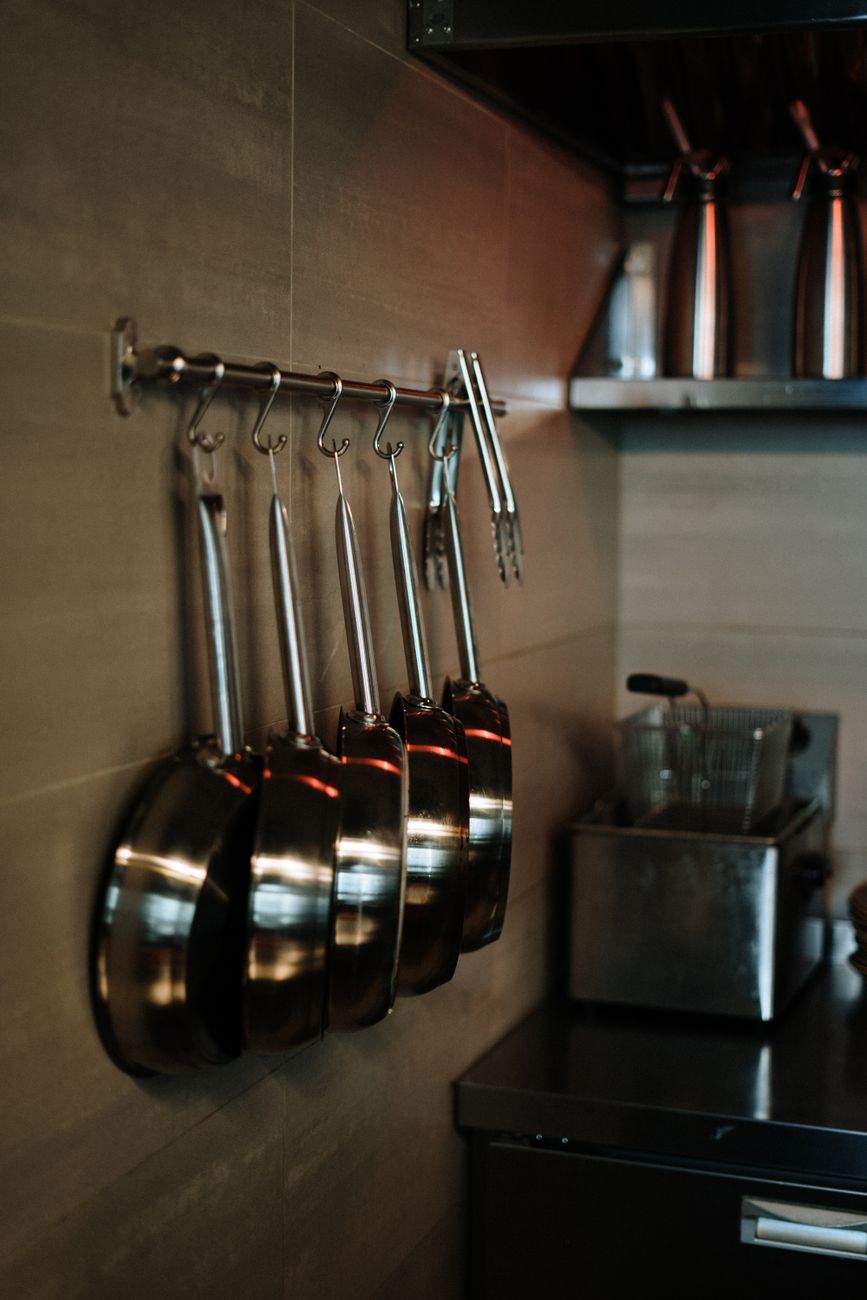
Three picks across three budgets. Each is verifiably PFAS-free (not just PFOA-free) with a coating or substrate specification we can name. Affiliate state flagged honestly.
Entry — Caraway ceramic 4-piece set, around $395
Caraway is the most-cited entry point in the non-toxic cookware category and the set most often recommended by editorial reviews (Wirecutter, Bon Appétit, Serious Eats) alongside its category peers Our Place and GreenPan. The coating is a proprietary ceramic sol-gel that Caraway certifies as PFAS-free, PFOA-free, PTFE-free, lead-free, and cadmium-free — the four-way test the phrase “non-toxic” actually implies. The bodies are aluminum with a stainless magnetic base for induction compatibility.
What you are buying: four pieces (10.5-inch fry pan, 3-qt sauté with lid, 4.5-qt Dutch oven with lid, 6.5-qt stockpot with lid) plus canvas storage sleeves and a magnetic pan rack — enough to run a kitchen without owning any other cookware. Coating lifespan is the honest trade-off: 3–5 years of primary use before release performance drops. At the price, the 4-year replacement cycle is $99/year across the whole set. Consumer Reports rated the Caraway fry pan the top ceramic non-stick in 2025 for release durability past year one.
Mid — Our Place Home Cook Duo (Always Pan 2.0 + Perfect Pot), around $260
This is the bracket where most single-household kitchens should land, and the set that fits cleanly into the two-piece kitchen argument from the case for one good pan and one good pot. Our Place’s ceramic non-stick coating is a Thermolon-family sol-gel, certified free of PFAS, PFOA, PTFE, lead, and cadmium by third-party testing that the brand publishes on its site. The Always Pan 2.0 (10.5-inch) covers sear/sauté/steam/braise; the Perfect Pot (5.5-qt) covers soup/stew/bread/rice. The duo replaces about eighteen pieces of traditional cookware between them.
The trade-offs are the same as any ceramic set: 3–5 year primary lifespan on the coating, oven-safe to 425°F (not 500°F), no induction compatibility on the standard model (Our Place sells a separate induction line). At the bundle price, per-year cost across a 4-year lifespan runs about $65 — which is why the ceramic category, priced right, beats stainless on total cost of ownership for kitchens that will not learn to cook with fond.
We recommend the duo for anyone building a first kitchen, downsizing an over-equipped one, or replacing a set that has aged out of its coating life. It is also the set to buy specifically to avoid the “PFOA-free but GenX-loaded” middle ground.
Heirloom — All-Clad D3 stainless 5-piece set, $600–800
The case for going stainless as the non-toxic answer is that stainless does not have a coating to fail — which means the entire chemistry-lifespan conversation is bypassed. All-Clad’s D3 line is three-layer bonded (18/10 stainless outer, aluminum core, 18/10 stainless interior), lead-free and cadmium-free by material specification, oven-safe to 600°F with lid included, dishwasher-technically-safe (do not, but you can), and covered by a limited lifetime warranty that All-Clad honors for household use. It is the pan Wirecutter has recommended as its top stainless pick for eleven consecutive years.
You are paying for: 25–50 year usable life across the set, made-in-USA construction (Canonsburg, PA — the last major American cookware factory), induction compatibility on the entire line, and the ability to sear at 500°F without any thermal-stability concerns. The trade-off is that eggs in stainless are a technique problem for the first month — an issue we covered in the one-good-pan piece. Once the technique is learned, the set outlives the kitchen it sits in.
At a $700 midpoint over 30 years, per-year cost is $23 — the highest of the three tiers, but the only one where the per-year cost stops rising at year four instead of resetting at year four.
Five rules for reading a cookware label
Most cookware brands are honest but selective — they name the compounds they exclude and stay quiet about the ones they include. The list below is the working shopping rule set. Apply all five before adding a pan to the cart and roughly 60 percent of the “non-toxic” market falls away.
- “PFAS-free” beats “PFOA-free” every time. PFOA has been illegal for over a decade; PFOA-free is a legal minimum. PFAS-free is a categorical claim about the whole fluorine chemistry family. If the label only says “PFOA-free,” assume PTFE or GenX is present and skip it.
- Name the coating chemistry. Reputable brands name it — Thermolon (Our Place, GreenPan), silicone-based sol-gel (Caraway, though not the same as Thermolon), vitreous enamel (Le Creuset, Lodge). If the coating is unnamed, the coating is a generic sol-gel with less testing.
- Check the substrate too. A PFAS-free coating on a cheap aluminum body still leaches at high heat. Look for stainless magnetic base (better), stainless outer body (best for stainless cookware), or “food-grade” designation on the aluminum.
- Watch for the lid rating. Many brands advertise “oven-safe to 500°F” for the pan and quietly rate the lid to 400°F. If you bake bread or finish under a broiler, the lid rating is the number that matters.
- Third-party certification is optional but useful. GreenGuard Gold, NSF, and California Prop 65 compliance are the three most-cited third-party checks. None is required by law; none is worth ignoring when it appears on the box.
The rule that catches the most misleading pans is the first one — PFAS-free vs PFOA-free. Once you have internalized that distinction, most of the “healthiest cookware” marketing on the internet stops working on you.
Auditing the kitchen you already have
The most useful step in any non-toxic-kitchen project is not buying new cookware. It is running an audit on the cookware already in the cabinet — which almost always contains one or two safe pieces already, and two or three that should retire. The audit takes about 20 minutes and requires nothing but a pen, a flashlight, and a willingness to throw away the pan that has been shedding coating flakes for a year.
The audit protocol in six steps:
- Pull every pan out of the cabinet. Put them on the counter. Count them. Most kitchens surface between 10 and 20 pieces — well over the two-piece minimum, and usually over the four-piece “essential” set as well.
- Sort by chemistry, not by size. Two piles. Left pile: bare cast iron, stainless, enameled cast iron, seasoned carbon steel. Right pile: everything with a non-stick coating.
- In the right pile, look for scratches, flakes, or discoloration. Any non-stick pan with visible coating damage retires today. It is not salvageable; the coating is already migrating into food.
- Check the manufacture date on the remaining non-stick pans. Anything made before 2015 was legally allowed to use PFOA. Anything made 2015–2020 was almost certainly using GenX as a replacement. Anything post-2020 from a brand that specifies “PFAS-free” is the only category worth keeping.
- Keep the left pile in full. Coating-free cookware does not have a non-toxic problem. The 30-year-old Lodge or the 15-year-old All-Clad is not the issue; the 3-year-old $40 grocery-store non-stick is.
- Buy replacements only for the roles the retiring pans played. If the pan you threw out was your primary fry pan, replace it. If it was the third-string 8-inch fry pan you used twice a year, do not replace it.
Most audits end with two safe pieces from the existing kitchen (usually a stainless saucepan and a cast iron skillet) plus one deliberate purchase (usually a ceramic non-stick fry pan or a Dutch oven), for a total of four pieces of cookware that will run the kitchen for the next decade. That is the outcome the two-piece kitchen argument predicts, arrived at from the non-toxic side rather than the minimalism side.
Frequently asked questions
What is the most non-toxic cookware? By strict chemistry, bare cast iron and tri-ply stainless steel are the most non-toxic — neither has a coating to fail, no PFAS is used in manufacturing, and food contact is with the substrate itself. If a coated non-stick pan is required (for eggs, low-fat cooking, or ease of cleanup), the strictest option is ceramic non-stick with a named Thermolon coating and third-party PFAS-free certification. Brands meeting this bar in 2026 include Our Place, GreenPan, Caraway, and Xtrema.
What is the healthiest choice for pots and pans? For a two-piece kitchen: one 10-inch ceramic-coated aluminum pan (Our Place, Caraway, or GreenPan) plus one 5.5-quart enameled cast iron Dutch oven (Le Creuset, Lodge, or Staub). For a stainless-only kitchen: an All-Clad D3 5-piece set plus a Lodge cast iron 10.25-inch skillet as backup for high-heat searing. Both configurations handle 99 percent of home cooking with zero PFAS exposure and either lifetime service (stainless/cast iron) or 4-year replacement cycles (ceramic).
Which pan is not cancerous? No pan on the current US market is legally allowed to be labeled “cancerous” — the FDA regulates food-contact materials, and PFAS-containing coatings that break down at normal cooking temperatures are subject to review. The honest concern with older Teflon (pre-2015) and current GenX-based non-stick is bioaccumulation of fluorinated compounds in the body over decades, not acute toxicity. Cast iron, stainless steel, and named-coating ceramic non-stick (Thermolon) have no known bioaccumulation concern. If “cancer risk” is the deciding factor, choose from those three materials.
What pans have no toxic chemicals? Five materials qualify: bare cast iron (Lodge, Field, Butter Pat), enameled cast iron (Le Creuset, Lodge, Staub), tri-ply stainless steel (All-Clad, Made In, Demeyere), seasoned carbon steel (Matfer, De Buyer, Made In), and PFAS-free ceramic non-stick (Our Place, Caraway, GreenPan, Xtrema). All five have public third-party or manufacturer-disclosed composition data. Everything else on the shelf — hard-anodized aluminum with unnamed coatings, “copper” pans that are actually aluminum, and low-price PTFE non-stick — sits in the unknown-chemistry column and is not worth the savings.
Is ceramic non-stick actually PFAS-free? When the coating is named Thermolon and the brand publishes third-party test data, yes — the ceramic is a silicon-oxygen sol-gel with no fluorine chemistry involved at any manufacturing stage. When the coating is unnamed or advertised only as “ceramic-based,” assume some fluorinated additive is present until proven otherwise. The naming test is decisive: Thermolon, published test data, and a PFAS-free certification is the trust bar. Anything short of all three is a claim, not evidence.
How long does non-toxic cookware last? By material: stainless and cast iron, indefinitely (30–50 years of active use is normal); enameled cast iron, 30–50 years (with lifetime warranty coverage from Le Creuset); PFAS-free ceramic non-stick, 3–5 years of primary use with the coating fully performing, plus 5–10 more years as a lower-stakes pan. The per-year cost math favors stainless over ceramic across 15 years or more of use; ceramic wins for households replacing cookware every 5–10 years anyway.
Read next
- The case for one good pan — the daily-driver argument for a single ceramic-coated fixture.
- The case for one good pot — the second half of the two-piece kitchen.
- The case for one good lamp — the same reduction logic, applied to the living room.
- Affiliate and editorial disclosure — what we earn from what.